

Animation’s real shift is not aesthetic. It is infrastructural
What happens to development when the audience arrives before the buyer does.
There is a Korean animated series called “Alien Stage.” It runs on YouTube. Its premise is a survival audition competition on another planet. By September 2025, videos with “Alien Stage” in the title had received more than 330 million views globally, with over 90% of that audience coming from outside Korea.
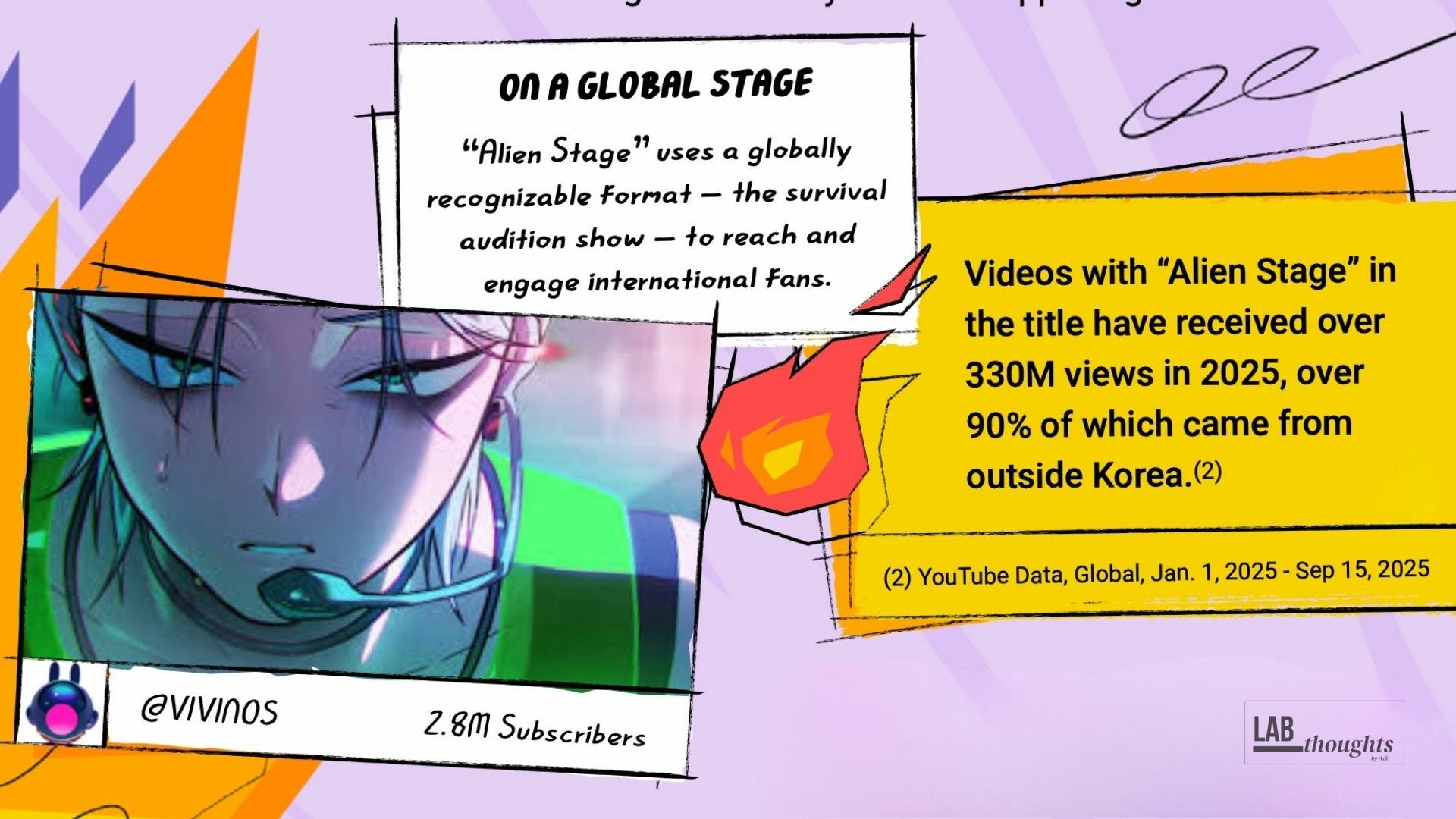
No traditional broadcaster commissioned it. No sales agent packaged it for export. No distribution deal preceded the international audience. The audience assembled itself around a premise that was already globally legible before any institutional hand touched it.
Now that is the signal worth tracking.
YouTube’s Culture & Trends report on independent animation frames all of this as a creator economy story, which it is. But the creator economy framing is too polite, and platform serving.
What the report is actually mapping is a change in how IP gets validated, and by extension, what the development process is now for.
The old sequence and the new one
The traditional development model has a familiar shape. Develop privately. Package. Pitch to a buyer. Get greenlit. Market after the fact.
The new shape is messier and more commercially interesting.
Publish early. Find the audience in public. Let fandom carry part of the discovery work. Localise faster than a distributor would have. Monetise around participation. Then decide whether the project needs a traditional greenlight at all.
This is not the death of the studio or the buyer. It is the unbundling of the functions they used to monopolise. Development is moving outward. Marketing is moving earlier. Localisation is becoming native rather than downstream. Talent sourcing is becoming visible and community-adjacent.
The greenlight is no longer the first real proof point. It is one of several.
What export-readiness actually looks like
“Alien Stage” is the report’s strongest case study, and its implications travel further than the view count suggests.
For decades, the international screen business treated exportability as something assembled downstream. A title sells internationally after distribution does its work, after buyers bless it, after localisation turns the project into something more portable. The common assumption was that a project’s origins needed to be managed or diluted before it could travel.
“Alien Stage” suggests a different order. I think export design is now happening inside the premise, the format grammar, and the fandom mechanics. The work does not wait for a distributor to tell it how to travel. It travels because its emotional logic is already globally readable.
The lesson here is not “make content for the world.” That is the generic trade panel version. The more useful and uncomfortable version is this: build concepts whose participation logic crosses borders before the sales process begins.
Global appeal is rarely a matter of sanding off cultural specificity. It is a matter of building a dramatic engine that strangers can enter fast. Korea’s independent animation community appears to understand this. Much of the rest of the world is still treating it as something to engineer in post.
Characters as operating systems
Japan’s contribution to the report is less a single breakout title and more an audience condition worth understanding.
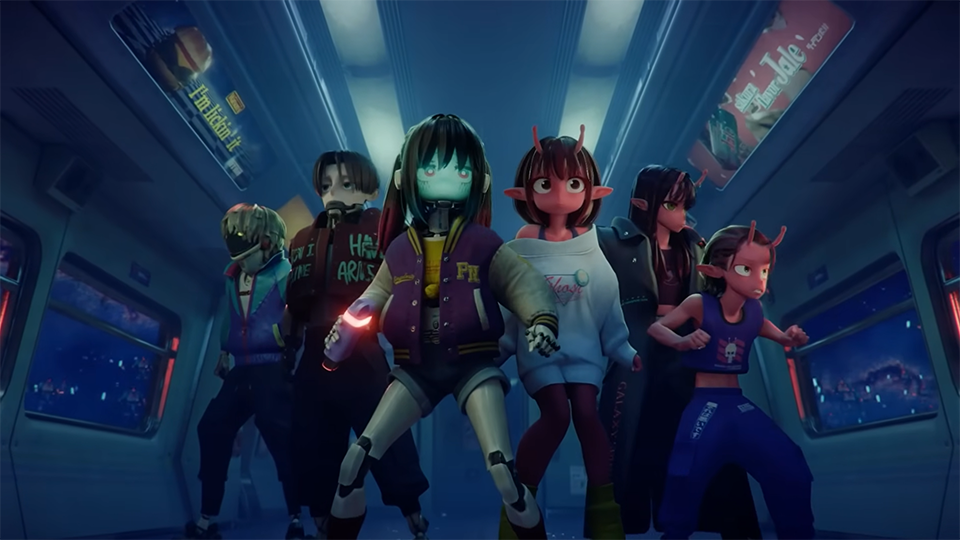
The report notes that dubbing and auto-translation tools are reducing language friction. The Japanese cyberpunk series “Milky Subway” offers dubbing in 10 languages, from Hindi to Spanish. Half of animation fans aged 14 to 49 in the survey agree they watch animated series in languages other than their own.
Alongside this sits the VTuber observation. Sixty-one per cent of 14 to 24 year olds who have watched a virtual creator online agree it is possible to feel just as connected to a virtual creator as a real one. That is a survey finding and should be read as directional rather than definitive. But the direction matters.
Put the two together and the Japanese signal becomes clearer. I think when character attachment is strong enough, medium becomes secondary. The audience will watch, react, clip, dub, draw, and circulate across formats because their loyalty sits with the character system, not with the delivery mechanism.
The industry still likes to sort things into separate boxes. Animation here. Creator economy there. Gaming elsewhere. Japan’s audience behaviour keeps breaking those walls. A character that sustains a participatory universe, one with enough identity gravity to keep moving across formats and markets, is a more commercially durable asset than a character that exists only inside a series that needs a renewal.
That is a different question to bring to development. Not just “can this be a series?” but “can this sustain a world that audiences will keep building after the episode ends?”
Glitch and the Australian blind spot
The Australian signal in the report is Glitch Productions, and it is the one that should land hardest for local producers.
YouTube highlights “Knights of Guinevere” as a recent Glitch release. Within three days of publication, more than 1,400 videos with “Knights of Guinevere” or “knightsofguinevere” in the title had been uploaded, including fan reactions and animatics. Glitch currently has 17.9 million subscribers on its channel.
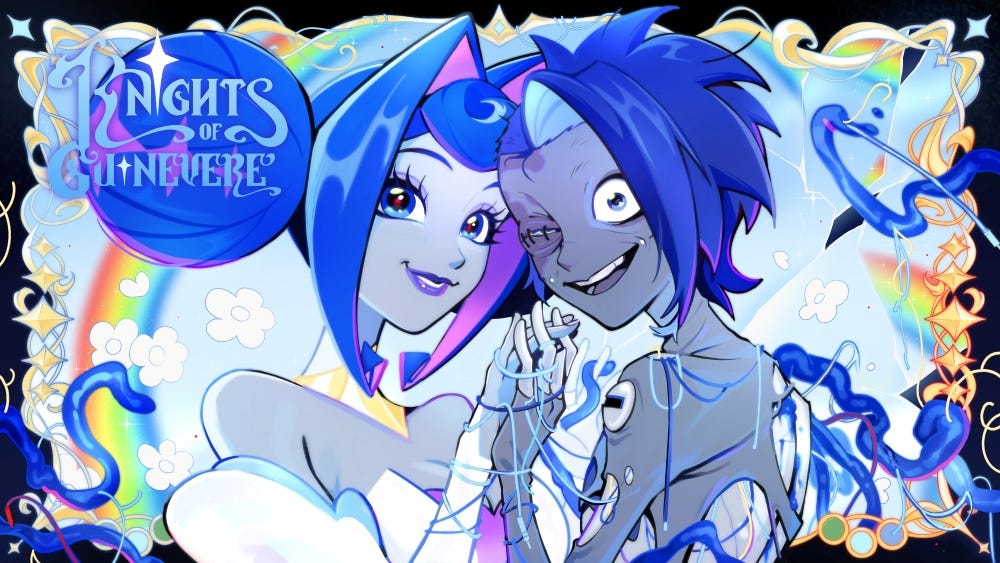
The report also describes the Glitch model clearly. It hires independent animators, often sourced through YouTube, to create series that live on its channel, while allowing showrunners to retain creative control.
Co-founder and CEO Kevin Lerdwichagul puts the economics directly:
“We generally like to turn each episode that we drop into a spectacle, or an event, and tied to this event is some merchandise. Every time someone buys a piece of merch that goes into funding more shows, more episodes.”
That is a self-financing loop built on audience participation. Each release generates fan response. Fan response generates reach. Reach enables merchandise. Merchandise funds the next production. The buyer is not at the start of that chain.
For years, Australian screen conversations have defaulted to a familiar corridor: funding body, broadcaster, streamer, commission, delivery, marketing, then an anxious wait to see whether the audience turned up. Glitch suggests a different path, and it is one that an Australian studio built.
I think the more disruptive question for the local industry now is not who will greenlight original IP but where original IP gets market-tested before those gatekeepers arrive. If that answer increasingly sits with creator-led studios, community participation loops, and public development systems, parts of the local industry may be solving the wrong problem.
They are still waiting for permission to validate ideas that audiences can now validate in public.
Roughness is no longer disqualifying
One of the report’s most practically useful findings is about format tolerance.
YouTube breaks online animation into three common types: animation memes (brief character animations intended to be remixed), animatics (rough sketched storyboard-style work treated as a finished release), and full episodes.
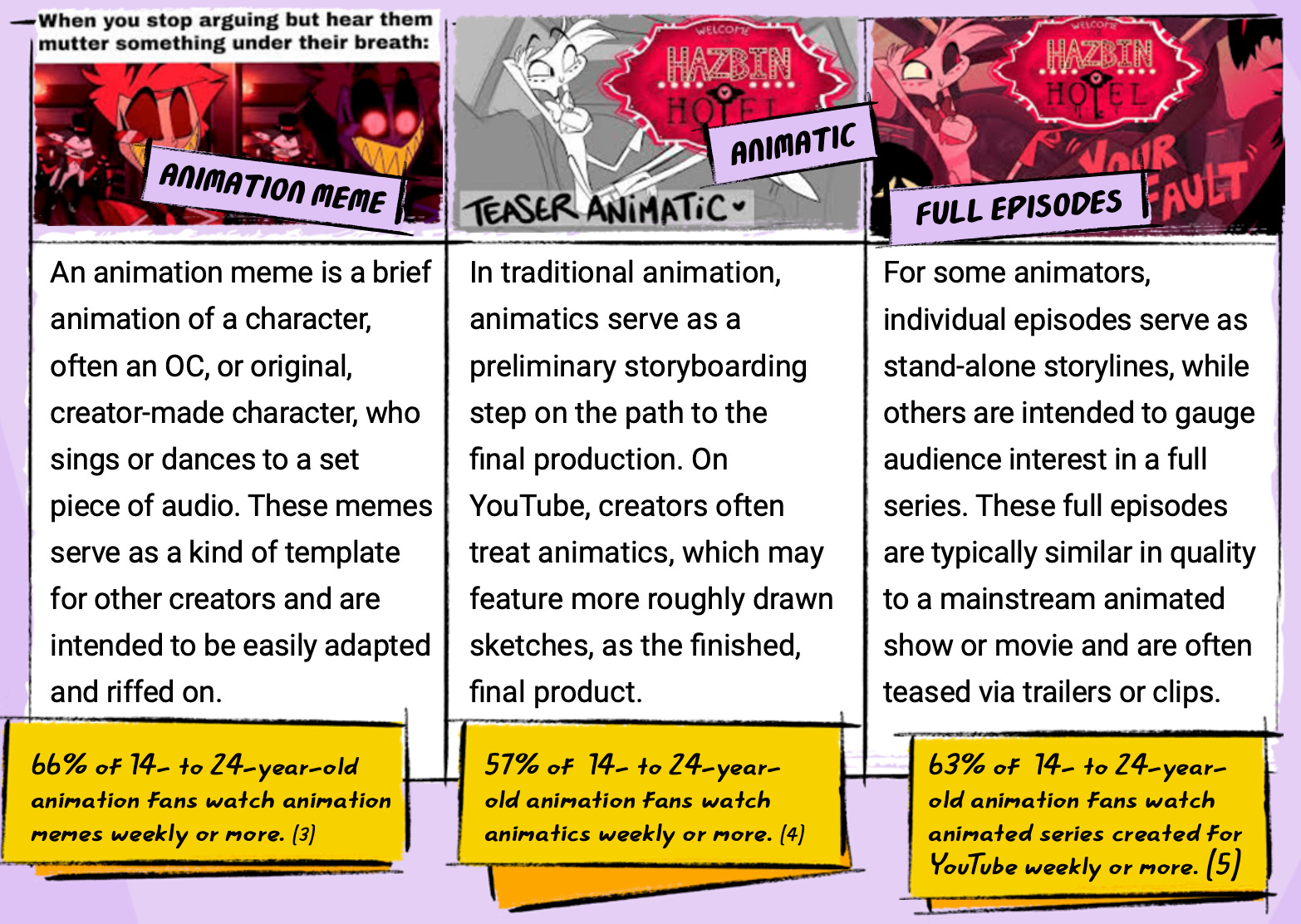
66 % of Gen Z animation fans watch animation memes weekly or more. 57% watch animatics weekly or more. 63% watch YouTube-created animated series weekly or more
These are U.S. survey figures and carry the usual scope limitations. But the directional reading is consistent across the broader report.
A generation raised on layered internet formats does not automatically read production roughness as failure. They often read it as proximity, process, and permission to participate.
That changes what testing means. An animatic is no longer only a private pre-production step. It can be a valid release object. A meme is no longer only promotional noise. It can be a market-entry mechanism. A pilot is no longer only a proof of concept for buyers. It can be a community magnet, a revenue event, and a talent-sourcing engine.
The implication for development teams is that the cost of a public proof-of-concept has dropped, and the information it returns has gone up. That is not a small shift.
Fan participation is not marketing. It is part of production.
The most commercially consequential section of the report concerns audience participation, and it is where the governance questions begin.
YouTube’s case study on “EPIC: The Musical” is the clearest illustration. Creator Jorge Rivera-Herrans started by developing the musical’s songs in public, building an audience around the process. Fans began creating animatics from the work. Rivera-Herrans recognised those contributions, created reaction videos to fan animatics, and eventually commissioned artists directly from the fan community to create official animatics for the series. The livestreamed release party, which featured these animatics, became his most-viewed long-form video.
Since the project began, there have been more than 1.3 billion views of “EPIC: The Musical” related content, with more than 4,000 uploads of related animatics in the first six months of 2025 alone .
Glitch ran a related play with “The Amazing Digital Circus.” The first episode features a scene where the protagonist opens doors into rooms. Glitch released the still online with the room replaced by a green screen, anticipating fan meme creation. The memes appeared immediately and spread the show organically.
What is happening across these cases is distributed world-building with audience labour inside the loop. Sometimes unpaid. Sometimes recognised. Sometimes commissioned. The line between fan behaviour and co-development is already blurring.
That is commercially powerful. It is also where the next wave of IP confusion is going to sit.
Who owns what once fan contribution becomes official contribution. What rights posture protects the creator without choking the community. How much of the world is open for remix and how much is closed for control. When does fandom act as free distribution and when does it start acting as a co-development layer that carries its own expectations.
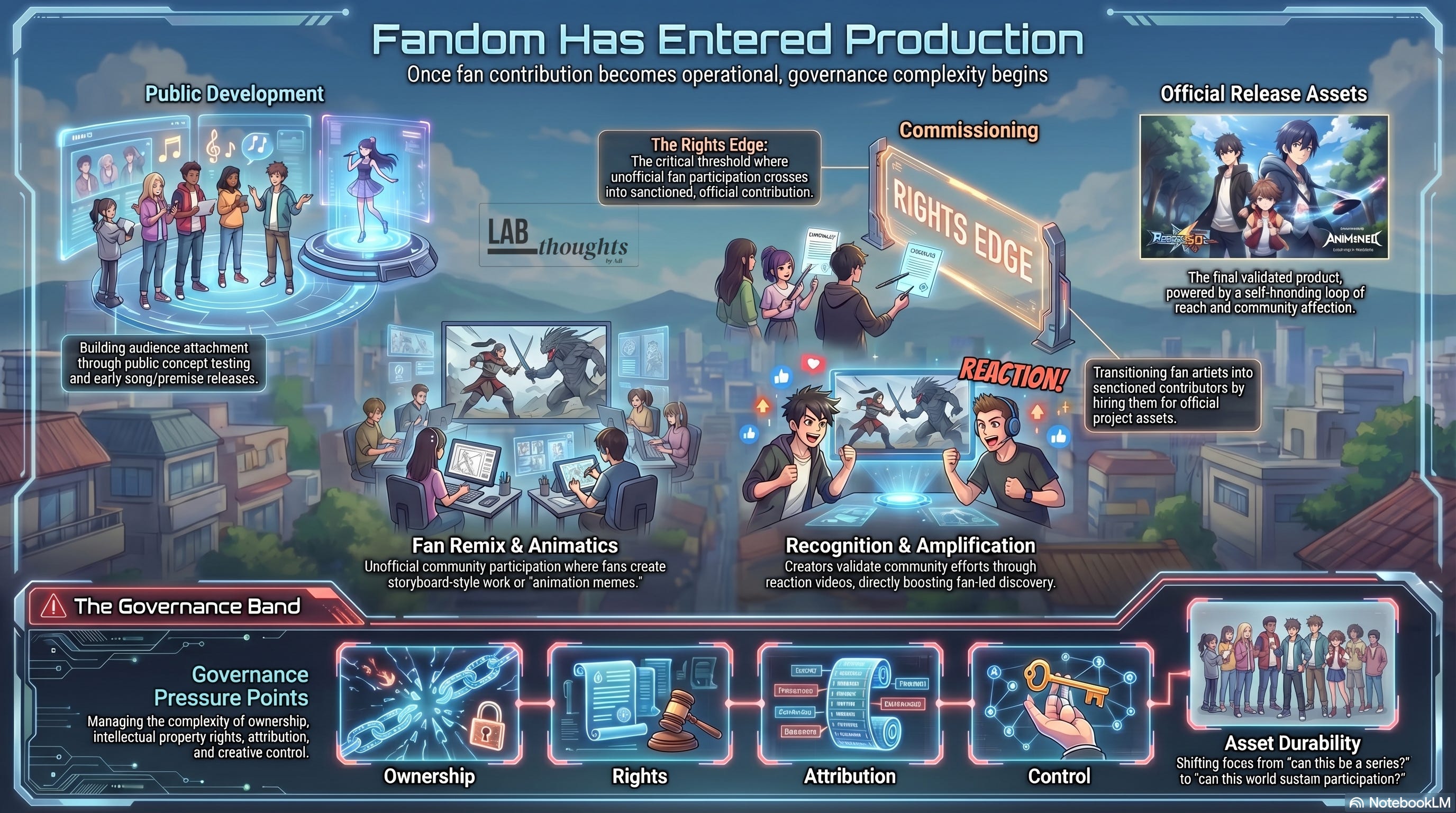
The report is a YouTube document. YouTube benefits from participation density, so it does not dwell on these questions. The projects that look most alive in public may also carry the most complex ownership edges. Buyers and rights holders who acquire into this space without examining the fan contribution layer are acquiring into a problem they have not scoped yet.
What this means if you are building original IP
The most useful takeaway for producers, development teams, and buyers is not “work with YouTubers.” That reads as a surface response to a structural change.
The real takeaway is this: stop treating audience formation as a downstream function. Build it into the IP from the start.
That means asking harder questions earlier in development.
Can the premise travel without a distribution deal opening the door?
Can the characters survive outside the episode window?
Can the work generate fan behaviour without engineering it?
Can localisation be designed in from day one rather than retrofitted?
Can the first release function as proof of demand, proof of tone, and proof of monetisable audience affection?
And if the answer to most of those is no, it is worth being clear about whether the project is being developed for the market that exists now, or for the one the industry used to control.
APAC is the lab here because the region keeps producing the audience behaviours and studio models the wider market is scrambling to understand.
Korea is showing how premise design can carry exportability before a buyer steps in. Japan is showing how character ecosystems train audiences for medium-fluid fandom. Australia has produced a creator-led studio that built repeatable release architecture outside the old commissioning corridor.
The report is titled as an animation story. Underneath, it is a map of what development looks like once the audience enters the process before the gatekeepers do.
If you’re working on a project, pitch, slate, or packaging problem that still feels messy on the page, send me a note about what it is and where it feels off. adi.tiwary08@gmail.com
Sources: YouTube Culture & Trends Report: Animation’s New Wave.